Turnkey vs Custom Simulator Packages: What Makes a Complete Setup Easier to Buy?
Turnkey packages reduce compatibility risk, while custom builds solve unusual rooms and premium goals. The best route depends on whether the buyer needs speed, certainty or a tailored environment.
Simulator buyers rarely want to become compatibility experts. They want a racing room, flight cockpit, golf bay or commercial attraction that works. That is why turnkey packages have become more important as the simulator market grows. More hardware choice is good, but it also creates more ways to mismatch components.
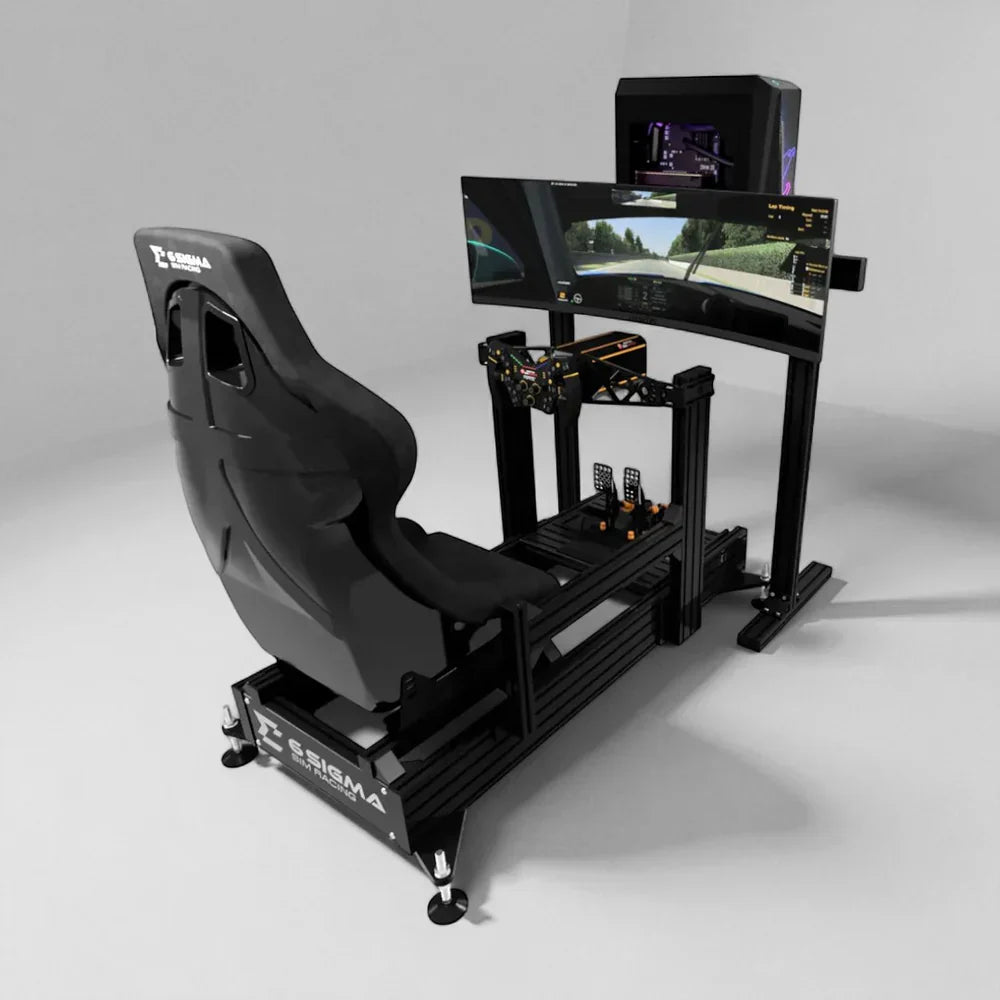
ElitePlay’s catalogue includes listed products, category routes and quote-led pages because not every buyer should shop the same way. Some customers should start with a product such as the 6S-160 / Asetek Invicta Turnkey. Others should start with Custom Builds and Installation because the room, installation or component mix needs planning.

What turnkey really means
A turnkey simulator package is not just a bundle. A good turnkey route reduces decisions. It brings the core components into one planned direction so the buyer does not have to compare every cockpit, pedal plate, seat, wheelbase, monitor stand, PC requirement and accessory from scratch. The value is confidence.
That confidence matters most in high-ticket categories. When a customer is spending several thousand dollars or more, uncertainty slows the purchase. They may like a cockpit but not know whether the wheelbase fits. They may want motion but not know whether the room has clearance. They may want golf but not know whether the launch monitor, enclosure and projector belong together. A turnkey path narrows the decision into a few serious options.
Turnkey does not mean the buyer has no preferences. It simply means the foundation has been thought through. The customer still chooses discipline, budget, space and upgrade level, but they are not left to build the whole system from unrelated parts.
Why component-by-component buying gets difficult
Buying simulator hardware piece by piece can work well for experienced users. It can also create confusion for first-time premium buyers. Every component has physical, electrical and software dependencies. A racing rig needs frame rigidity, seat fit, wheel mounting, pedal positioning and display alignment. A flight cockpit needs control layout, software compatibility, screen plan and possibly training-intent clarity. A golf bay needs enclosure size, launch monitor placement, screen, projector and hitting surface to work together.
The problem is that many components look compatible until the room is involved. A product may fit technically but not comfortably. A monitor stand may support the screen but not the field of view the driver expects. A launch monitor may be accurate but unsuitable for the available depth. A motion platform may be exciting but awkward in a shared room. Turnkey packages reduce some of this risk because the product path already assumes a system.
This is why the Find My Simulator page is valuable before shopping. It helps users decide whether they are looking for a racing, flight, golf or commercial route before they get lost in product details.
When a turnkey racing package makes sense
Racing is one of the clearest turnkey categories because the user experience depends on the cockpit, controls and display working together. A strong wheelbase is wasted on a weak frame. A great pedal set feels inconsistent if the seat position flexes. A motion system creates problems if the cables, floor and clearance are not planned. A turnkey racing package gives the buyer a more coherent starting point.
A product such as the 6S-160 / Asetek Invicta Turnkey is useful for buyers who want a serious racing direction without building every line item from zero. A motion-based option such as the 6S-120 / Asetek Invicta Turnkey - Mimo 4 Motion makes sense when physical immersion is part of the goal from day one.
The main reason to choose turnkey racing is speed to confidence. The buyer still needs to confirm room fit, but they can evaluate a complete direction rather than a spreadsheet of parts.
When custom racing is better
Custom racing builds make sense when the room, user or goal is unusual. A very tight space, triple-screen plan, content studio, showroom, commercial installation or future motion upgrade may all require a custom approach. The more the simulator has to integrate with a room, the more valuable a custom quote becomes.
Custom also helps when the buyer has existing hardware. If they already own a wheelbase, pedals or PC, a standard package may duplicate parts. A custom route can plan around what they have and what they want next.
ElitePlay’s Custom Builds and Installation page is built for this scenario. It turns the conversation from “which item should I buy?” into “what are we trying to build?”
Flight: turnkey for cockpit clarity, custom for training intent
Flight simulator buyers often need more guidance than racing buyers because the category spans entertainment, home cockpit realism and training support. A turnkey flight cockpit can be useful when the customer wants a defined control layout and a more aircraft-like experience. It reduces the uncertainty around panels, controls and cockpit feel.
However, flight also has a regulatory language problem. If the buyer wants training credit or FAA-approved use, the hardware and approval status matter. A normal enthusiast cockpit should not be described as an approved training device unless it actually meets the relevant requirements. This makes custom consultation important for commercial or training-led projects.
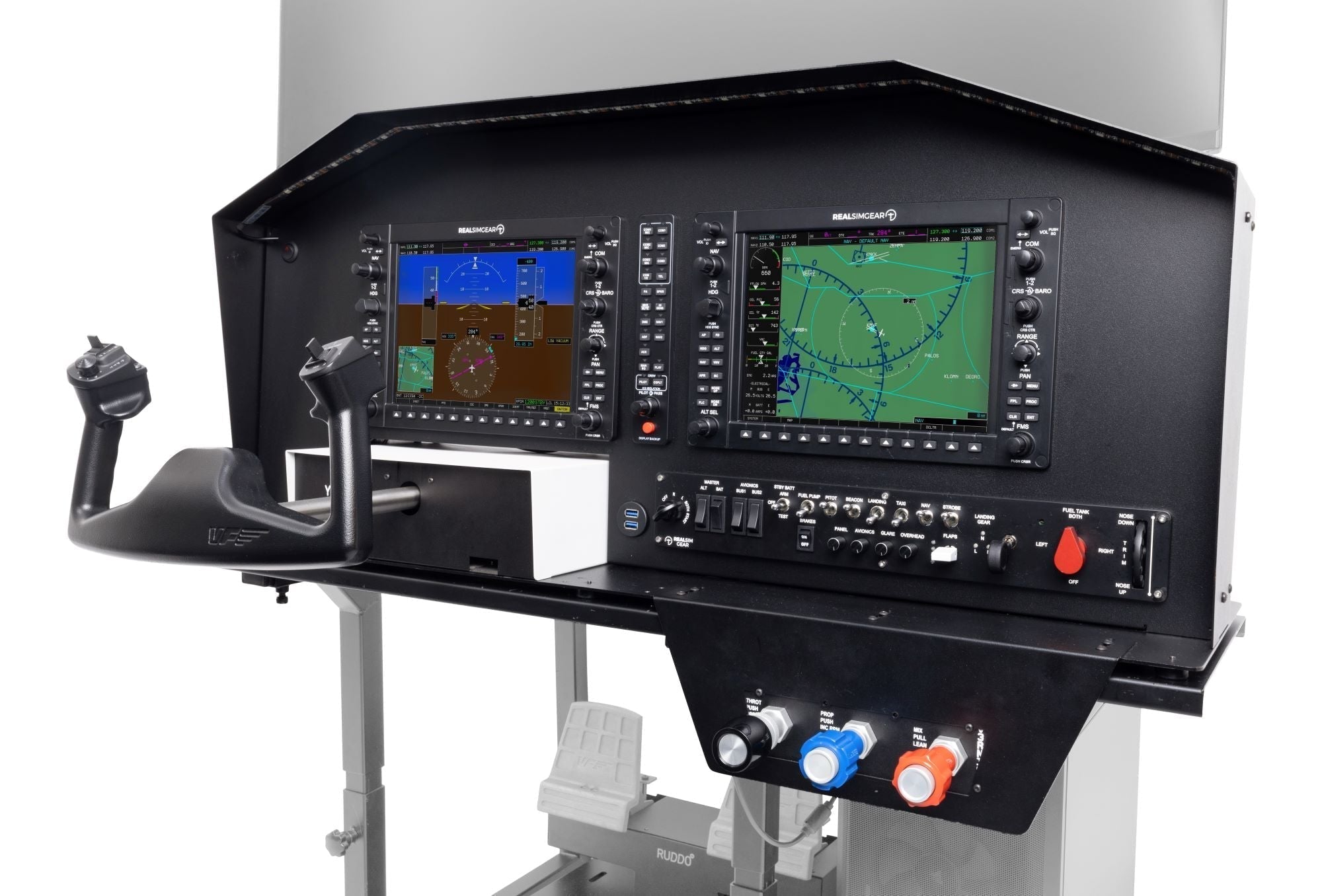
Products such as the RSG G1000 Package and RSG Cirrus Cockpit show why flight buyers benefit from guided routes. The right cockpit depends on aircraft familiarity, software, intended use and whether the buyer is building for training, practice or immersion.
Golf: components plus custom package quote
Golf is different because the simulator is not usually one product. It is a bay. The buyer needs a launch monitor, hitting mat, enclosure or impact screen, projector, software and room plan. Some components can be bought individually, but the final experience depends on measurements and compatibility.
That is why ElitePlay’s golf route is intentionally consultative. A shopper can browse Golf Simulators, compare Launch Monitors, review Pro Golf Enclosures, and still use a custom quote route if they want the whole bay planned together.
Live products such as Mevo+, Mevo Gen2, the Country Club Elite Golf Hitting Mat and the Pro Golf Simulator Enclosure Kit can all be excellent components. The question is whether the room turns them into one good bay.

The buyer experience advantage
The biggest advantage of a turnkey or guided package is not only technical. It is emotional. Customers buying high-value simulator equipment often feel excited and uncertain at the same time. They know the end result they want, but not every technical dependency. A guided route reassures them that the store understands the full setup.
That can increase conversion because the buyer does not feel abandoned. Instead of leaving them to decode specs, the store presents routes: racing, flight, golf, commercial, custom build, launch monitor, enclosure, product page. Every route answers a different level of certainty.
Good internal linking matters here. A blog post should not only educate; it should move the reader toward the right next action. Someone still exploring should use the finder. Someone who knows they want racing should view racing. Someone planning a venue should contact the commercial team. This is exactly how the ElitePlay site is now structured.
A simple decision framework
- Choose turnkey if you want speed, compatibility and fewer decisions.
- Choose custom if the room is unusual or installation matters.
- Choose a product page if you already know the exact item you need.
- Choose a category page if you know the discipline but not the setup.
- Choose Find My Simulator if you are still deciding between routes.
- Choose Commercial Simulator Solutions if the project needs business, venue or multi-bay planning.
Why the store should offer both
A premium simulator store should not force every buyer into one shopping path. Some customers want to browse. Some want a guided quiz. Some want a quote. Some want to see the best products first. Some want to understand the difference between static and motion, or between a launch monitor and a complete golf bay. The store needs all of those paths because high-ticket customers do not all arrive with the same level of certainty.
Turnkey products help decisive buyers. Custom pages help complex buyers. Blog posts help research-stage buyers. Category pages help comparison shoppers. Together they make the store feel more complete and more trustworthy.
The bottom line
A turnkey simulator package makes buying easier when the customer wants confidence and a clear route. A custom build makes buying easier when the customer needs the setup tailored to the room, use case or business model. The best simulator store offers both, then helps the customer choose the right path.
Start with Find My Simulator if you are unsure, browse Racing, Flight or Golf if you know the discipline, and use Custom Builds and Installation when the project needs to be planned as a complete environment.
How to use this guide before you ask for a quote
The easiest way to turn this advice into a useful recommendation is to collect the practical details before asking for help. For a home setup, take photos of the room from two angles, write down the usable width, depth and ceiling height, and note whether the simulator needs to share the room with furniture, storage or daily work. For a commercial setup, add the business goal, expected number of users, preferred session length and whether staff will operate the system. Those details let ElitePlay narrow the answer quickly instead of asking you to decode every product specification.
Budget is useful too, but it should be shared as a working range rather than a hard guess. A serious simulator can often be built in stages: frame and core controls first, then display, PC, motion or room improvements later. If the store knows the end goal, it can recommend a first step that will not block the later upgrade. This is especially important for racing motion, golf bays and commercial projects because the expensive mistake is not always buying too little. Sometimes it is buying a component that cannot grow with the rest of the room.
Also decide who the simulator is really for. A single enthusiast, a family room, a training environment and a venue do not need the same answer. A single user can tolerate a more tailored cockpit position. A family needs adjustment. A venue needs durability and reset speed. A training room needs repeatability and clarity. Once the user is defined, the product path becomes easier to judge.
Common mistakes to avoid
- Buying the headline product before confirming the room measurements.
- Treating the screen, cockpit, mat, launch monitor or motion platform as separate decisions instead of one environment.
- Choosing the highest specification without checking whether the user will feel the benefit.
- Forgetting power, cable routing, ventilation, access and maintenance space.
- Ignoring who else will use the simulator and how quickly it needs to adjust.
- Assuming commercial projects are just larger home builds.
- Leaving installation planning until after the hardware has already been chosen.
A good simulator purchase should feel considered rather than rushed. If a product page answers the whole question, use it. If the category page gives enough direction, start there. If the project still has unknowns, use the guided route or contact form. The goal is not to make the most complicated setup possible. The goal is to build a simulator that fits the room, feels right to use and has a sensible path for future upgrades.
Keep the final decision practical: write down the one thing the simulator must do best, then the two things that would be nice to add later. That small priority list keeps the buying process focused and helps prevent a setup that looks impressive on paper but misses the way it will actually be used.
How to compare two good options
Once the shortlist is down to two or three good choices, stop comparing every specification equally. Pick the criteria that will actually change the experience. For a racing build, that may be cockpit rigidity, pedal position, motion readiness and display plan. For a golf bay, it may be swing clearance, launch monitor placement, enclosure size and projector position. For a flight or commercial setup, it may be control layout, user workflow, durability and support. A spec only matters if the user will feel it or the room requires it.
Price should be compared as a system cost, not just a product cost. A lower-priced item can become the expensive route if it needs extra brackets, replacement controls, a different screen, a stronger frame or a later rebuild. A higher-priced package can be better value when it reduces compatibility risk and moves the buyer closer to the complete experience. This is why ElitePlay’s guided pages, category pages and quote routes all matter: they help the shopper compare the full setup rather than a single line item.
Also compare the amount of decision-making each route leaves open. Some buyers enjoy choosing every component. Others want a confident recommendation. Neither buyer is wrong. The best route is the one that matches how much control the customer wants over the build. A hobbyist may prefer component-level decisions; a commercial buyer or busy homeowner may prefer a clearer package or a managed quote.
When to stop researching and ask for help
Research is useful until it starts repeating itself. If the same questions keep coming back — will this fit, will these parts work together, is motion worth it, should this be custom, what happens if I upgrade later — that is usually the point where a guided recommendation is more valuable than another comparison tab. Simulator setups have too many room-specific variables for every answer to be solved by reading.
The best message to send is simple: the room dimensions, a photo or two, the main goal, the rough budget, the products already being considered and any must-have features. With that context, ElitePlay can steer the buyer toward a product, a collection, the finder route or a custom quote. That saves time and lowers the chance of buying something that is technically impressive but wrong for the space.
This is also where a specialist store is most useful. A marketplace can show hundreds of parts, but it cannot easily explain which parts belong together for a real room. A guided simulator store should reduce the number of decisions the customer has to make alone and make the next step feel obvious.
Next step
If you are comparing options now, start with Find My Simulator or send your room, goals and budget through the contact page. ElitePlay can help you decide whether a listed product, a guided collection route or a custom quote makes more sense.
Sources and market context
This guide was written in June 2026 and shaped around current simulator, golf and aviation market signals, plus the products and pages available on ElitePlay Simulators.